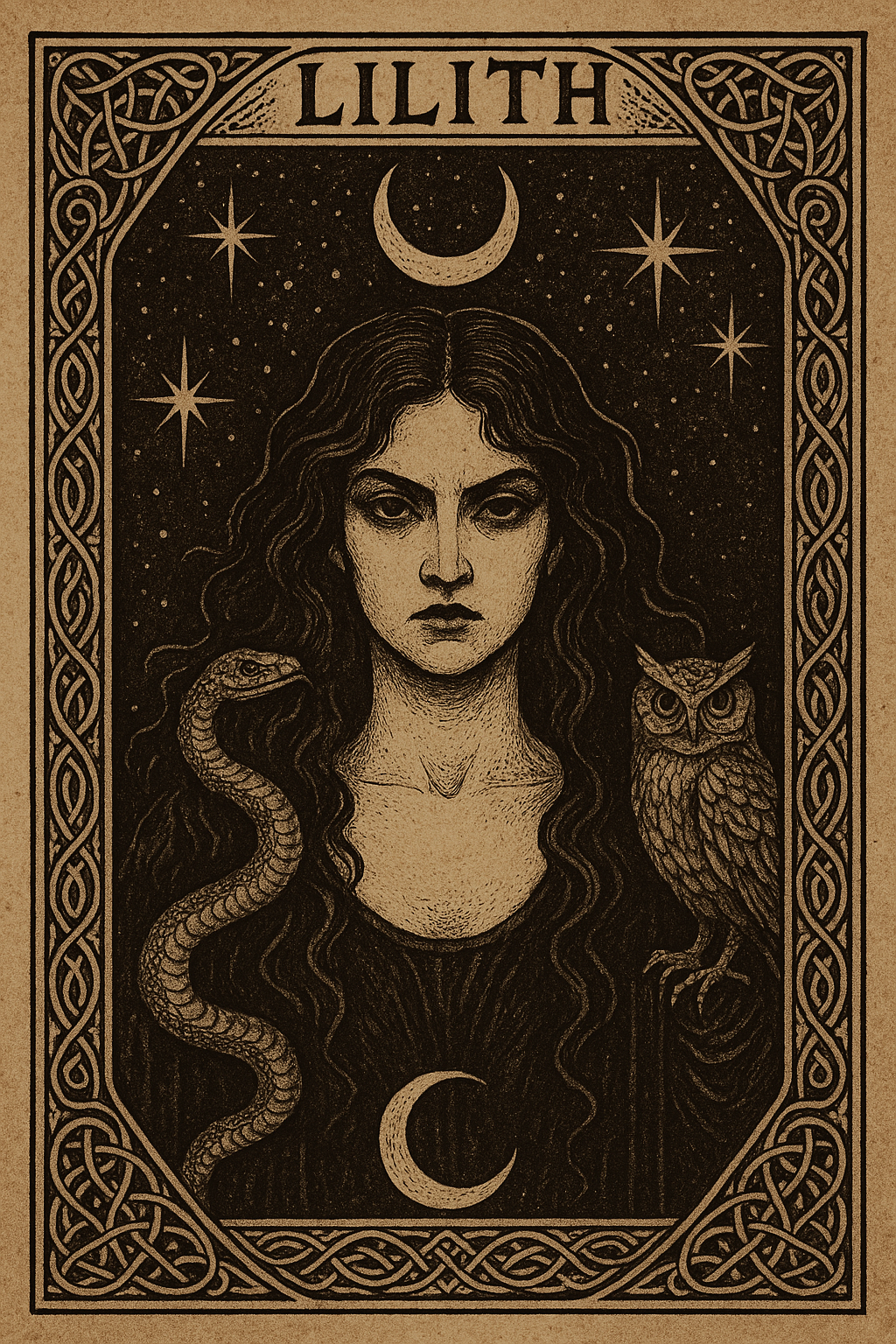
For some, Lilith is a demon from ancient myths.
For others, she’s a misunderstood heroine — a symbol of “feminist freedom” and defiance against patriarchy.
Both are wrong if they think she ever stood for harmony or true equality.
Whether in her oldest form or in her modern costume, Lilith represents the same force: rebellion against the divine dance between masculine and feminine.
And that rebellion is one of the hidden roots of the loneliness epidemic consuming the modern West.
1. Lilith in the Ancient World
The earliest known Lilith appears in Mesopotamian texts as a night demon — a bringer of storms, seducer of men, and killer of infants.
In Jewish tradition, especially the medieval Alphabet of Ben Sira, she is described as Adam’s first partner. The story says she refused to “lie beneath” him during intimacy, claiming equality. But this wasn’t a negotiation for balance — it was an outright refusal to yield in any way, a rejection of harmony itself.
When she didn’t get her way, she abandoned Eden and devoted herself to harming humanity. Later traditions paint her as a seductress of men, a strangler of newborns, and an enemy of the home.
The consistent thread: a will that refuses divine order, choosing self-rule even at the cost of destruction.
2. The Modern Reinvention
In the 20th century, occultists, neo-pagans, and eventually pop culture stripped Lilith of her demonic context and rebranded her as a “feminist icon.”
Now she’s the patron saint of “sexual liberation” and “self-empowerment.”
But look closer — this reinvention still rejects the family, the home, and the masculine-feminine bond. It reframes them as chains to be broken rather than as sacred bonds to be tended.
Instead of openly attacking humanity like the ancient demon, the modern Lilith smiles while encouraging people to cut themselves off from deep connection in the name of “freedom.”
3. Rebellion Against Polarity
Healthy masculine–feminine relationships are built on polarity — a natural interplay of energies that creates attraction, trust, and mutual growth. This is not the same as inequality; polarity is about complementarity, not competition.
The Lilith spirit — ancient or modern — does not seek to heal imbalance. It seeks to invert or sever the polarity entirely.
Where there could be a living dance, Lilith pushes for sameness or total independence. Where there could be mutual dependence, Lilith drives mistrust.
The result? Relationships lose their magnetic pull. People avoid surrendering to each other in love, seeing vulnerability as weakness.
4. The Cost in the Modern West
We are living the fruits of this rebellion:
- Marriage rates are at historic lows.
- Birth rates are collapsing in nearly every developed nation.
- Record levels of loneliness and isolation — both physical and emotional.
- Men and women talk past each other, often treating the opposite sex as an adversary.
In this climate, family is often framed as a “trap” rather than a foundation for life. Many pursue total self-sufficiency, but find it’s a cold place to live.
5. Same Spirit, Different Dress
Ancient Lilith was nakedly destructive.
Modern Lilith dresses in empowerment slogans and self-love quotes.
But in both cases, the goal is the same:
- Separate men from women.
- Separate both from the divine order.
- Leave the individual isolated and untethered, mistaking rebellion for freedom.
Conclusion
Freedom without connection is emptiness.
True liberation is not found in severing bonds, but in choosing them wisely and nurturing them.
The Lilith spirit — whether it’s the demon of ancient texts or the Instagram goddess of “self-empowerment” — is not about balance, but about ending the dance of masculine and feminine entirely.
If we want to heal the epidemic of loneliness, we must reject that spirit and rebuild the sacred polarity — the dance that has been the foundation of life, love, and human flourishing since the beginning.
Leave a Reply